Arild Franck
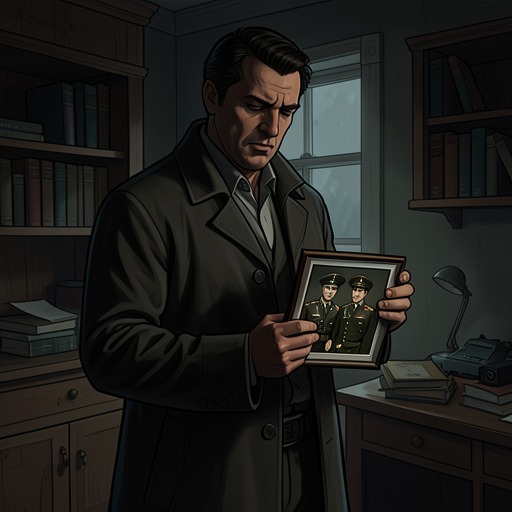
The SonArild Franck, the assistant governor of Staten Maximum Security Prison, is both the prison’s architect and a corrupt official who uses his authority to help a criminal network frame Sonny Lofthus. His pride in the institution and conviction that he understands its work do not make him its impartial guardian: the same command structure he helped create becomes a means of arranging a prisoner’s release and steering him into a murder investigation.
Identity and Investment in Staten
Franck takes personal ownership of Staten. The prison’s design drew inspiration from Lenzburg Prison in Switzerland, with its emphasis on security and efficiency rather than comfort, but Franck considers its creation his responsibility. In his view, Staten and its maker are nearly interchangeable. That identification makes his demotion to assistant governor particularly galling: the board appoints a governor from Halden Prison instead, a decision Franck regards as undeserved and foolish.
His self-image rests on practical competence rather than enthusiasm for political reform. Franck sees his job as keeping inmates confined without allowing them to become ill, die, or emerge as noticeably worse people. The claim casts him as a custodian of order, but the narrative places that professional pride beside his corruption. He can condemn incompetence in other institutions while recognizing, with frustration, that he too has escaped detection.
Authority and the Framing of Sonny Lofthus
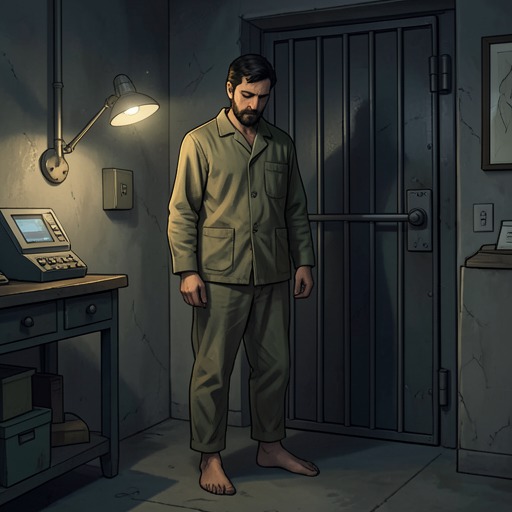
Franck’s position gives him leverage over the conditions of imprisonment and the movement of inmates. When investigators seek to question Sonny Lofthus, who is in solitary confinement, Franck asks that the interview take place at Staten rather than at Police Headquarters. The prison is thus not merely the setting of the inquiry: Franck is able to shape where an important interrogation occurs.
That authority is central to the conspiracy involving Hugo Nestor and Yngve Morsand. Morsand wants to kill his wife himself but also wants someone else to take responsibility, anticipating that the police will suspect him. For payment, Nestor arranges the plan with Franck, including Sonny’s day release and location, and has him sent with a prison officer Franck trusts. The scheme makes the imprisoned Sonny a usable scapegoat: the evidence against him is not simply discovered but enabled by people manipulating the prison’s procedures.
Franck’s complicity also shows how the criminal arrangement crosses institutional boundaries. Nestor supplies the criminal plan; Franck supplies access and cooperation from inside Staten. A trusted, corrupt prison officer carries out part of the arrangement, extending the chain beyond Franck himself. The prison’s machinery of custody is turned toward manufacturing the appearance of guilt.
Exposure and the Mole Inquiry
Franck’s corruption is not limited to the plot against Sonny. Simon Kefas confronts him over Iversen Property’s dealings with the Twin, alleging that the company helped launder proceeds from drugs and trafficking in exchange for fictitious losses that reduced taxes by hundreds of millions of kroner. The accusation connects financial respectability to organized crime and places Franck within a wider pattern of compromised institutions.
The mystery of a police mole gives Franck’s role a further dimension. There had long been rumors that someone in the police leaked information to the person running much of Oslo’s drug and sex-trafficking trade, but those rumors had not been substantiated. During the later inquiry, Franck becomes a source of information about the mole’s existence and code name. A recording sent from an untraced Hotmail address is presented as evidence connected to the prison governor, and another character dismisses Franck as replaceable, suggesting that his usefulness to the larger operation has run its course.
In Simon’s confrontation with the people around the Twin, the question of whether Franck identified the mole becomes explicit. A witness says that he was gagged while the question was put to him; later Simon asks whether the identity was disclosed. The information Franck has supplied is limited but consequential: Sonny ultimately names Franck, and the answer confirms that Franck told him the mole had a code name. These exchanges make Franck a compromised intermediary in the investigation, even as they leave the mole’s identity to be established through further evidence.
Collapse of Control and Narrative Significance
Franck’s confidence in institutional competence is undercut by the failures he observes. From his office window, he watches the night-shift officers leave and notes late arrivals. He resents what he sees as ineptitude by Kripos and the Homicide Squad after a tip-off fails to prevent Sonny from escaping the Ila Centre. He is also angered by the consequences of Sonny’s actions, including Nestor’s death. Yet Franck privately recognizes the irony: the law-abiding official in him is frustrated that the police have never caught him, a corrupt assistant governor. His contempt for others’ failures sits beside his own successful evasion.
Franck’s story is therefore one of authority turned against its stated purpose. He understands the prison as a system for securing inmates and preserving order, but his role in arranging Sonny’s day release makes that system serve a private criminal design. His eventual usefulness as a source on the mole does not undo his earlier complicity; instead, it exposes the unstable alliances through which information and protection circulate. In the novel’s wider account of corruption, Franck is the institutional hinge between prison operations and the criminal network outside them.